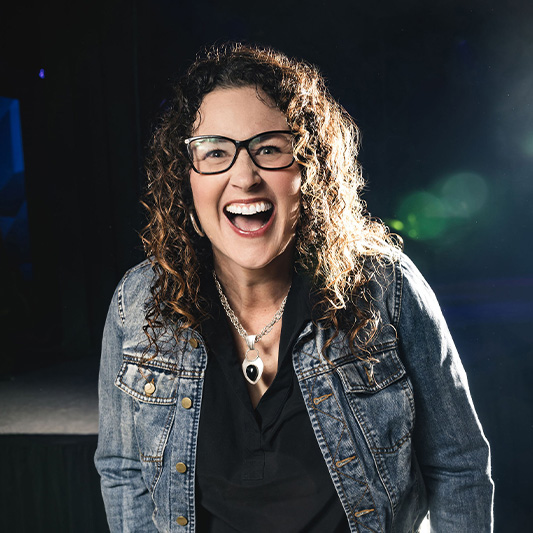
When our daughter Judah decided to spread her wings and move out, I was all for it. She had just finished her second year of college and wanted to explore her career away from the small town where we live. I helped her pack most of her belongings and felt bursts of pride at her initiative and courage. I was supportive and emotionally controlled.
Until I wasn't.
Although she was only moving two hours away, I knew I would not have the same access to her as I once did. I know we are supposed to "train up our children in the way they should go" — and I am all about the training. But the "going" part seemed like a bitter pill, especially when you raise kids you actually like.
The whole family went to drop her off. We prayed, we cried, we laughed — mostly at my inability to keep it together. Then we got in the car to leave. Billy Joel's "Moving Out" came on the radio. That was unnecessary roughness. I cried most of the way home.
Open Hands, Impossible Faith
Have you ever held something so precious that the thought of releasing it felt impossible? Perhaps it was a dream you had nurtured, a relationship in which you had deeply invested, a child leaving home, or a season of life you desperately wanted to preserve. We have all stood at crossroads where faith asks us to open our hands and trust God with what we cannot control.
Jochebed, the mother of Moses, paved the way for all of us in that moment.
The Darkest Chapter
To understand Jochebed's story, you need to step into her sandals. Her people — the Israelites — had gone from honored guests to an enslaved workforce. A new Pharaoh rose to power, one to whom Joseph meant nothing, and what followed was nothing short of systematic oppression. When even brutal labor failed to slow the growth of the Israelite population, Pharaoh escalated. He ordered the Hebrew midwives to kill all baby boys at birth. When they courageously defied him, he issued a decree that would echo through history:
"Every time a boy is born to the Hebrews, you must throw him into the Nile River, but let all the girl babies live."
Exodus 1:22
This was the reality Jochebed faced every single day.
A Fine Child
When Moses was born, Exodus 2:2 simply states that Jochebed "saw that he was a fine child." The Hebrew word used here — tov — is the same word used in Genesis when God surveyed His creation and declared it good. In Pharaoh's Egypt, being born a Hebrew boy was essentially a death sentence. And so Jochebed made her first act of defiance: she hid him for three months.
Three months of muffling every cry. Nursing in silence. Living in constant terror that a single whimper might put them all in danger. The text gives us no indication that Jochebed had received a prophetic word or divine reassurance. She was not operating on certainty — she was operating on love and faith that God could provide.
"By faith Moses' parents hid him for three months after he was born, because they saw he was no ordinary child, and they were not afraid of the king's edict."
Hebrews 11:23
She Could Hide Him No Longer
Babies grow. They cry louder. They become more difficult to conceal. And Pharaoh's soldiers were relentless. Jochebed reached the end of her ability to control the situation — and she made a choice so counterintuitive it required extraordinary faith. She chose the river.
But let's be clear: her choice was not passive resignation. She constructed a waterproof basket — the Hebrew word is tebah, the same word used for Noah's ark. She placed Moses where he might be found by someone with compassion. She stationed his older sister Miriam nearby to watch what would happen. Jochebed was letting go, but she was letting go to someone. She was releasing Moses from her protective grip into God's protective care — even though she could not see how the story would end.
We Rarely See the Full Picture
Jochebed had no idea that her son would be raised in Pharaoh's palace. She could not have known he would lead Israel out of slavery, meet God at a burning bush, or that his name would echo through history. She simply did the next faithful thing with no guarantee of the outcome.
That is what trust looks like in real time.
When I dropped Judah off at her apartment and cried all the way home to Billy Joel, I was not releasing her into the unknown. I was releasing her into the hands of the same God who guided a basket through the Nile. The One who knew where Moses was going. The One who knows where our children are going too.
Whatever you are holding onto right now — whatever precious, terrifying thing feels impossible to release — Jochebed's story is a reminder that letting go and trusting God is not the absence of faith. It is faith in its most costly, courageous form.
One Question for You
What are you holding onto right now that God might be asking you to place in the river? I would love to hear. Send me a note — I read them all.
And if you want more of this kind of honest, real-life faith talk delivered straight to your inbox, join the newsletter. No spam, no hustle culture — just encouragement that doesn't require you to pretend you have it all together.